

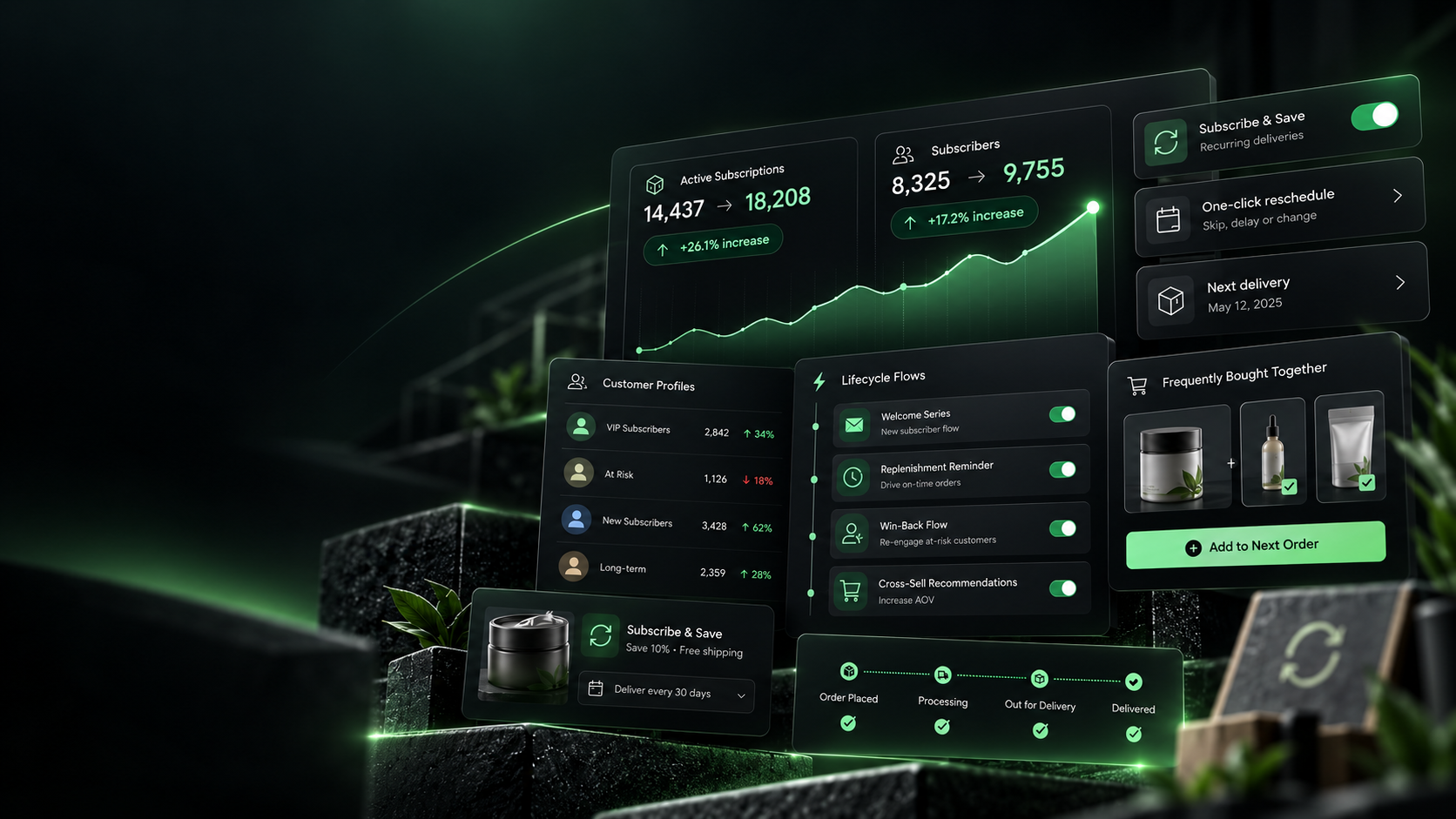
How we turned subscription into a full-funnel growth and retention strategy, growing active subscriptions 26% and subscribers 17%.
Subscription was already an important revenue channel, but growth had started to slow.
The challenge went beyond getting more customers to click Subscribe & Save. The offer had to compete with frequent promotions, changing discounts, and the natural friction that comes with asking someone to commit to a recurring purchase.
During aggressive storewide promotions, one-time purchases could occasionally become more attractive than the standard subscription offer. At the same time, we had limited visibility into why existing subscribers were leaving.
We needed to make subscription more compelling to join, easier to maintain, and less vulnerable to the rest of the promotional calendar.
Instead of treating subscription as another option in the buy box, we saw an opportunity to make it part of the broader ecommerce strategy.
That meant looking at the entire subscriber journey:
The goal was simple: make subscribing the best way to buy and make staying subscribed as easy as possible.
If Subscribe & Save consistently felt like the strongest long-term offer on the site, more customers would choose it.
And if we understood why customers were cancelling, we could solve those problems directly instead of relying on blanket retention discounts.
Improving both acquisition and retention should allow us to grow the subscriber base while increasing the total number of active subscriptions.
We stopped treating subscription growth as a single CRO initiative.
The strategy combined merchandising, offer development, lifecycle marketing, retention, customer research, promotional planning, and conversion optimization.
First, we positioned Subscribe & Save as the strongest evergreen offer on the site.
Then we looked at where the subscription journey was breaking down. We analyzed cancellation behavior, surveyed customers, studied repeat-purchase patterns, and identified opportunities to make subscription easier to discover, join, manage, and expand.
From there, we built a series of improvements across the storefront and customer lifecycle rather than relying on one large change.
Subscribe & Save was positioned as the best year-round value available on the site.
That positioning also became part of how we planned promotions.
For example, during a 20% off promotion, we could still communicate that subscribing unlocked a 25% subscriber rate.
This kept the subscription value proposition visible even while the broader site was on sale.
We redesigned the PDP buy box to make subscription more prominent and easier to understand.
Subscribe & Save was presented as the Best Offer and became the default selection while still giving customers a clear path to make a one-time purchase.
The goal wasn't to hide the alternative. It was to make the value difference immediately obvious.
Eligible one-time purchases could be converted into subscriptions directly from the cart drawer.
That gave customers another opportunity to subscribe without sending them back through the purchase flow.
We expanded subscription messaging beyond the PDP and integrated it across high-visibility areas of the site.
That included:
Subscribe & Save became part of the storefront merchandising strategy instead of something customers only encountered at the point of purchase.
Repeat customers were one of the highest-intent audiences for subscription.
Rather than simply telling them to subscribe, we connected the offer back to why they were buying the product.
Messaging focused on consistent use, replenishment timing, and when customers could reasonably expect to see results.
The subscription became less about receiving another shipment and more about staying consistent with the product.
We introduced a cancellation survey so we could stop guessing why subscribers were leaving.
The data surfaced an important insight: many customers weren't cancelling because they disliked the product. They were cancelling because they had too much of it.
They were overstocked.
That changed the retention strategy.
Instead of trying to save every cancellation with another discount, we focused on making it easier for customers to adjust their delivery schedule.
Subscription reminder emails included one-click actions that allowed customers to push their next shipment out by 7 or 14 days.
They didn't need to log into an account, navigate the subscription portal, or cancel and come back later.
If the problem was simply timing, we gave them a faster solution.
The same lifecycle emails also created an opportunity to increase subscription value.
Customers could add another product to their upcoming subscription directly from the email.
This turned routine subscription reminders into a low-friction cross-sell opportunity.
We occasionally ran campaigns specifically designed to acquire new subscribers.
Some included deeper discounts that customers could keep for the lifetime of their subscription.
That created a stronger incentive to subscribe while also rewarding customers for staying in the program longer.
Events like Black Friday and Cyber Monday created a unique challenge.
Sometimes the promotional offer needed to exceed the standard Subscribe & Save discount.
Rather than letting those events encourage subscribers to cancel and repurchase, we created additional value specifically for subscribers during those periods.
This allowed us to participate in aggressive promotional moments without ignoring the long-term value of recurring customers.
We also looked at where cancellations increased within the recurring order lifecycle.
At selected milestones, subscribers could receive gifts such as a mixer, shaker, or tumbler with an upcoming shipment.
The goal wasn't simply to give something away. It was to create additional value at points where customers were more likely to leave.
Active subscriptions grew from 14,437 to 18,208, an increase of more than 26%.
The number of individual subscribers grew from 8,325 to 9,755, an increase of more than 17%.
That represented 3,771 additional active subscriptions and 1,430 additional subscribers.
The larger shift was how subscription operated within the business.
It was no longer just a recurring purchase option inside the PDP.
Subscription became part of the ecommerce system.
Promotional planning accounted for it. Merchandising reinforced it. Lifecycle messaging gave customers easier ways to manage upcoming orders. Cancellation data informed retention strategy. CRO reduced friction around joining and expanding a subscription.
Rather than relying on a single tactic, the program improved through a series of connected changes across acquisition, conversion, and retention.
The strategy ultimately came down to two principles:
Make subscription the best way to buy.
Make staying subscribed easier than cancelling.